

Succeed in your medical device or combination product journey
Get an update every time we publish new insights
When and how to build your medical device Quality Management System (QMS)
Many of the most significant challenges in Medical Device Development come down to how we best manage uncertainty. We have a clear picture of what we’re aiming for, namely an approved and adopted device that is demonstrably safe and effective and is used and reimbursed within our target healthcare markets. How to get there however is harder to define but left up to us as developers to determine for ourselves, a difficult task particularly if we’re new to medical device development.
When, how, and how extensively to implement our Quality Management System is a key example here. With the introduction in February 2026 of the FDA’s Quality Management System Regulation, ISO-13485 becomes the reference point for a suitable medical device quality management system in both the EU and US…
The “Medical Mindset” – a gap in supporting healthcare innovation
This article is born of recent experiences that got me thinking about how effective we are at supporting innovative new healthcare technologies to get in front of patients where they can be of value. How well does the help we give match the help that’s needed? And do we need to try and find another, better, way?
These topics are also on my mind because, without aiming to be hyperbolic, the healthcare space is one of the most difficult ones to innovate within. Journeys are long, regulation is (rightly) high, and buying decisions fragmented and complex. Innovation failure also has a much bigger cost; in patients’ health, well-being and quality of life
How to choose a Medical Device consultant (by a medical device consultant)
The nature of medical device or combination product development is that many projects, at one point or another, are likely to engage external support - in the form of medical device consulting. This is true from the largest pharma to the smallest startup, and is due to the high complexity, large breadth, and many niche topics that have to come together to make a medical device successful. From specific knowledge on biology, chemistry, or engineering through quality and regulatory, to market access and reimbursement, the world of medical device development is too large for most companies to keep all needed skills available at all times.
In short: It's rare that a single organisation has, internally, the complete breadth of skills needed to bring a product successfully to market…
What to know before you 510(k)
From our work with medical device startups and corporate pharma, one of the biggest fears, and most consequential challenges, is getting that all important regulatory approval and permission to market your product in a target region.
Failure here often has big consequences. A re-submission not only delays revenue on the product you've been working long and hard on, but incurs significant extra cost; in time until you're ready to apply again, in resources to re-write applications or gather clinical data, and in senior leader or investor confidence.
Many products simply don't have the time and resources to be able to survive such a rejection. Meaning years of work lost, and patients ultimately unable to get the advanced care they need…
Want to know which pitfalls to avoid in your MedTech Clinical Evaluation? Look here
Helpful guidance addressing the clinical evaluation of medical devices is difficult to come by. This is because, unlike, for example, the Regulatory space, there is a dearth of published guidance, standards, and expectations to help medical device and combination product developers navigate the expectations of Health Authorities.
A recent article published in the journal Expert Review of Medical Devices, however, sheds some rare and useful light onto this topic.
Partnering in healthcare is now essential, but how to make it work?
The need to partner is one of the biggest changes to the development of both medical devices and drug products to emerge over the last few decades. In reality, most drug products and medical devices reaching the market today do so as the result of two or more organisations working together. Of all of the ways to do this - for example buyer-supplier, acquisition, etc - partnership is the most successful.
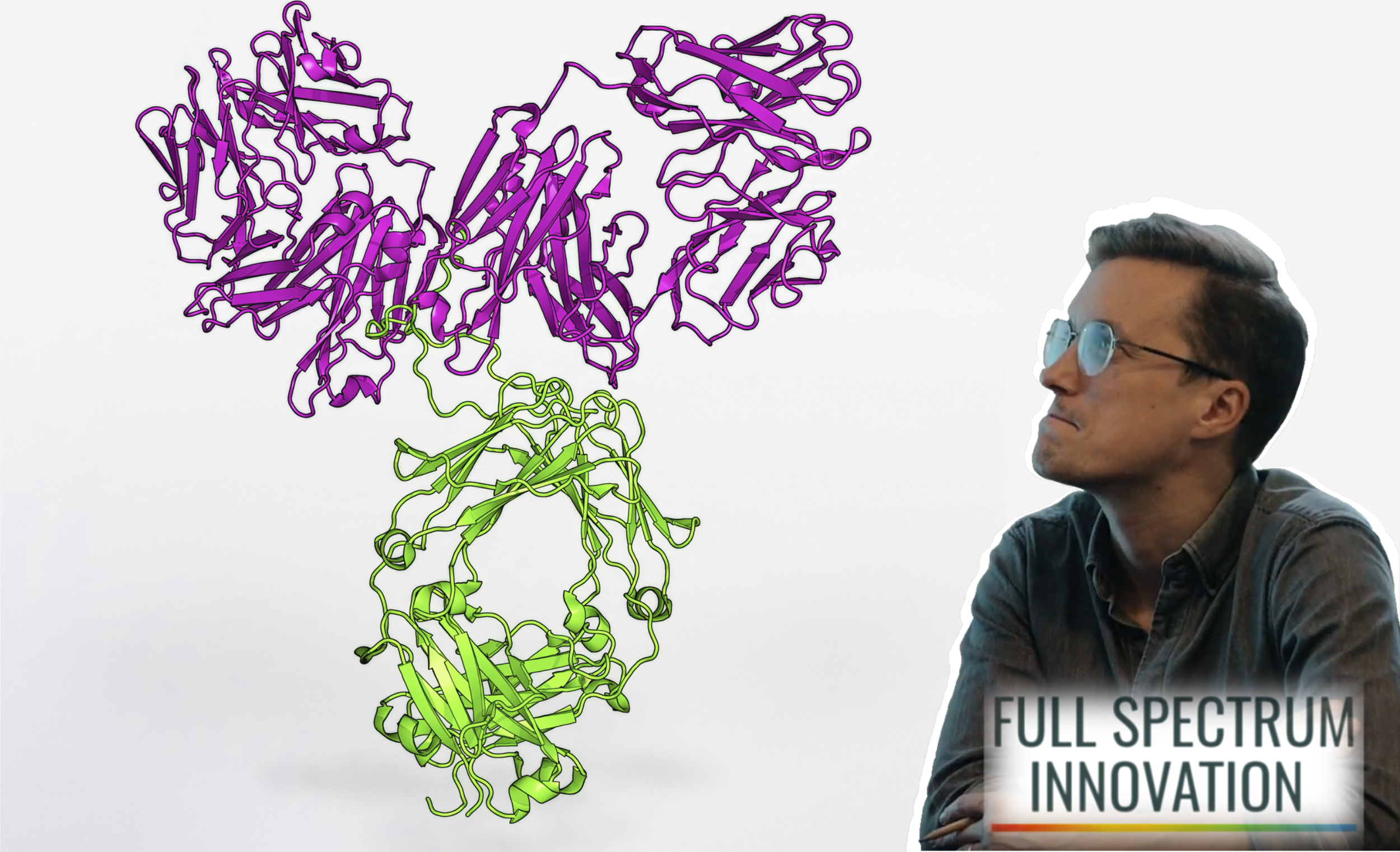
How a device could kill your revolutionary mAb or C>, and what to do about it
The world of pharma is now, largely, a world of biologics. Whether a monoclonal or bispecific antibody, advanced cell or gene therapy, or recombinant protein; biologics are opening up revolutionary new therapeutic pathways, creating more specific treatments whilst reducing off-target effects, and pushing forward the boundaries of what is possible in healthcare.
In with all of the potential and promise though, we should lose sight of the fact that biologics also have some specific challenges and limitations, which need to be considered and responded to to make any particular treatment a success.
How to ensure you're building the right product in MedTech (free tool)
Perhaps the most important stage in developing a MedTech device or Combination Product is in requirements definition. This may sound unusual to those of us used to just getting on and building things, but most approval and adoption failures happen either because the wrong product was developed, or the product requirements and design justification were not sufficiently well considered and documented, making it impossible to demonstrate safety and efficacy to regulators…
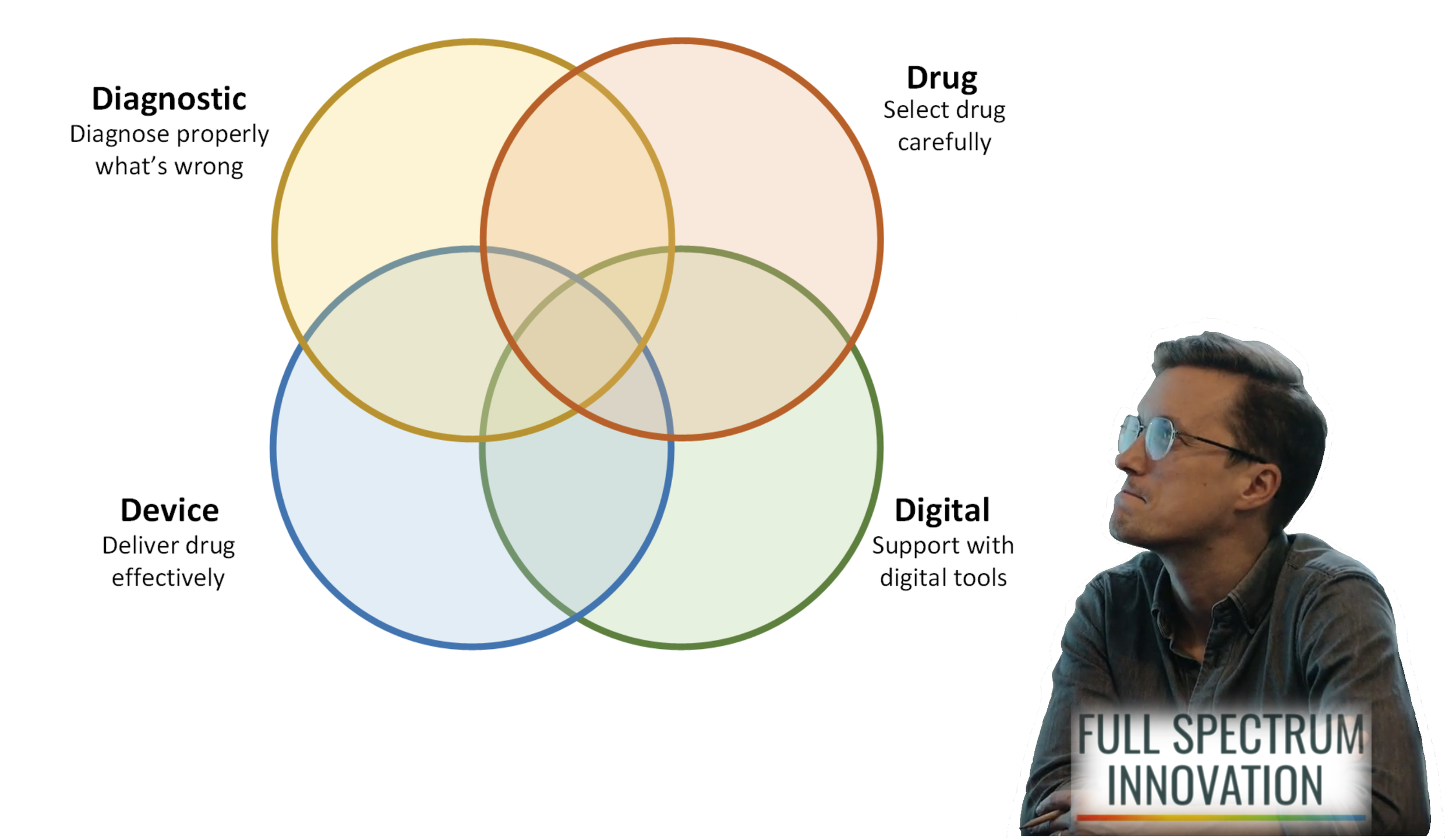
Patients and Pharma no longer needs drugs. They need therapeutic systems
All systems, including healthcare require change. In a dynamic system patients and healthcare systems evolve, positive change ensures that a healthcare system continues to deliver to its purpose; providing high quality therapeutic outcomes to patients and society, sustainably over the long term, including for manufacturers.
This change need can emerge as much, or more, due to the success of a system, as its failures.
It’s important therefore to periodically take a step back, and assess whether a system is working well, or if changes are needed to re-align the system with its purpose.
You need more than technology to win in MedTech. Here's what 'more' means
It’s easy when developing innovative MedTech, Combination Product or Digital Health products to be excited about our technology. Perhaps we have a new technique that revolutionises drug delivery and efficacy. Maybe it’s a novel combination of sensing, biology, and chemistry enabling early diagnosis of a life-changing degenerative condition. Or perhaps a digital health solution helping patients live fulfilling lives while managing chronic disease.
Much harder is to answer is this: How do we avoid becoming one of the 75-90% of projects that fail to navigate to market and actively help patients?
Is this MedTech's 'VW' Moment?
In 2015 the automotive industry was rocked by revelations that VW, a leading manufacturer, had cheated emissions tests, and so mis-reported the environmental impact of 11 million cars worldwide. This was not a standalone incident, but a single example of the widespread ‘gaming’ of emissions standards across the industry. It laid bare a fundamental failure in the way that cars were designed, tested, and regulated – severely impacting trust across an entire industry.

Thinking Holistically about Healthcare
Anyone who has visited a doctor recently, or works on developing new treatments, knows that the pace of change in healthcare, and the pharmaceutical industry, is huge. New drugs, treatments and technologies come along rapidly, and you need to be active to keep up with the latest progress in the market…

Leadership in Innovation
Leadership seems to be in short supply these days. This dearth of leadership is present everywhere you look – from politics to banking, from agile tech firms driven by super-ego founders to immobile corporate behemoths trapped in Mayer’s pit. Leadership was recognised in ancient times as being of great importance. Despite this, we seem to have forgotten the lessons of the past…